Showing posts with label Abidjan. Show all posts

Monday, July 25, 2011

Mi tio de Abobo II

Mi tío de Abobo es otro. Lo vi ayer en la tarde, en Abobo. Mi hermano anfitrión solo repetía el hecho que esta parte de Abidjan parece una aldea. Calles sin pavimentar y por primera vez no vi los comunes BMWs y Mercedes, a los que me acostumbré ver por todo Abidjan. Al menos, todos los distritos que visité hasta el día de ayer.
Mi tío se alegro de verme y salió a comprar un sucrerie, es decir una soda cuando llegue. Trabaja en el hotel de mi papa anfitrión, el hotel “Alex Le Grand
El Hotel es modesto y muy único. Si bien no se encuentra en el distrito de negocios Plateau, es lo mas marfileño que he visto, sin intentar a cualquier costo emular a los hoteles del que fue su país colonizador. Mi tío es el recepcionista y encargado del hotel, además de ser chofer de Gbaka y Wôro Wôro.  
Tonton Jean Pierre me explicó que existen muchos Dozos al momento en Abobo (cazadores tradicionales, se unieron a la milicia a favor de Ouattara) por un congreso en todo el proceso de reconciliación del país. Abobo según El, es el lugar más seguro en Abidjan, porque todos se conocen y está repleto de FRCI. Me explicó que ahora hay mucho trabajo que hacer y que en el ZOO no hay animales. Se murieron de hambre, ya que este distrito, que hace 3 meses atrás era apodado Bagdad, se convirtió al final de la pelea en un distrito fantasma y no había quien alimente a los habitantes del ZOO.
Tonton se reía y me decía que porque me regreso tan pronto a Ecuador, que la independencia de Costa de Marfil se celebrará días después de mi partida.
 Cuando estaba en mi casa en Marcory, meses atrás recuerdo como me preguntaba, intrigado y con una mirada lúgubre porque escogí Costa de Marfil como destino.
Me alegra tener la oportunidad de verlo en su vida normal, sonriendo.

Monday, July 4, 2011

The visit to Abidjan

A long time ago, when I had a short trip to France to meet with my parents in may, French Stations broadcasted from Yammousoukro, Cote D’Ivoire’s political capital, Ouattara’s presidential investiture in which,the presence of UN’s secretary General and the president of the former colonial power, France send a strong message to the international community : Cote D’Ivoire is ready to turn the page and become a peaceful country.

Is it that easy to turn the page and not to cling and what has been written in the past two decades, after two months?  Is it that easy to ignore the economy that took a plunge, the food rationing, water shortages, fear, and curfews? While Ivoirians just want “peace, work, go to a maquis (as local bar-restaurant are known here) and sleep”  the political crisis aftermath and the differences created between ethnic and political groups  within the country will take years to overcome.
I moved to Ivory Coast to volunteer in February, only to leave the country a month after to neighboring Ghana. I had the chance to travel  and stay for a few days in Abidjan at the end of april, to see if I could move back and visit a couple of friends, who took me around town, joking about the situation in Abidjan and what they had gone through.

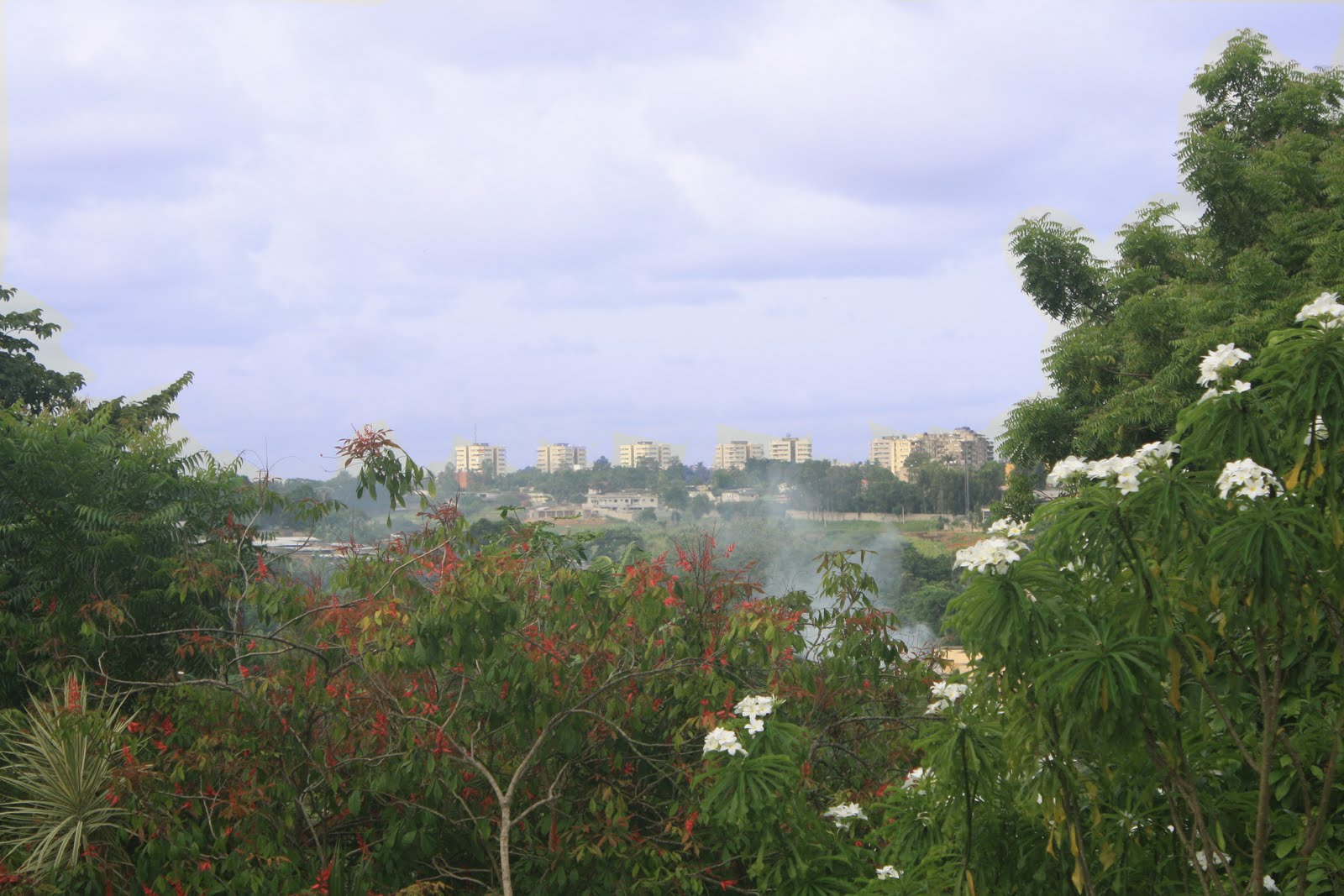
 View of Abidjan from the upscale neighborhood of Cocody where political figures such as the defeated president that refused to cede power Laurent Gbagbo, once resided.


Bullet holes in houses, like the one in this window, are a reminder of events that took place not that long ago.


Quartier des Ambassades, The Ambassadors’ Residential Area in Cocody where Gbagbo resided, suffered quite a lot of damage as FRCI (several militias that went under the umbrella of Republican Forces of Cote D’Ivoire, Ouattara supporters) advanced in order to take Gbagbo. This house on the way to Gbagbo’s home is a clear example of that.


 Ouattara’s victory, despite its loyal support from the international community was highly disputed specially in abidjan. While Ouattara is taking a reconciliation approach nowadays, through memorabilia watches and pins, its supporters, as soon as Abidjan fell, were a bit more straighforward.
The trace left by the burnings that took place in april. According to my friend bertrand* (as we walked around the neighborhood, he told me that people were burned down in the last days. Many Gbagbo supporters attacked Malians and Burkinabe inmigrants, who were blamed for the decay of the country the past decade. this divide was fueled by gbagbo propaganda.aTtrocities were commited by both parties during the 4 months of crisis. Bertrand told me corpses were lying for days while abidjan fell to Pro Ouattara forces, since no one could go out to the street. These signs of burning are for sure people that were burned alive, but cannot trace whom, why or by whom

The jaPAnese ambassador was evacuated by the United nations operations in cote d’ivoire (UNOCI) in a dramatic operation in april, around a week before gbagbo was captured. The residence was attacked by pro gbagbo supporters, called the young patriots. The street where the japanese residence is located, is a reminder of the battle to residents in abidjan.


AS FRCI encountered young patriots, the battle intensified with gun shots providing sound effects for Abidjan. everything on the way was burned down, as the car next to bertrand shows.


and we finally arrive! Gbagbo’s house is now guarded by UN forces and now that abidjan is calmed, it has 
become a tourist attraction.


On our way back we found some bullet shells in the street. I collected a few as souvenirs.
Happily though, the days that Abidjan’s background sounds was the sound of AK-47’s going off, seems far. And we all hope it stays that way. 


Tuesday, April 19, 2011

La nostalgie et l'incertitude- On a personal note of my days whilst in Abidjan

“You will be fine; we would not bring you here if the situation were that bad. International media make it look very bad but the situation is not really like that here…” Those were the words written in the last e-mail that Willy, the 19-year-old in charge of my internship placement with an arms control NGO in Abidjan, sent me.


I knew what I was getting myself in trouble the moment I took the opportunity to intern for an NGO in Abidjan, and that an evacuation and backup plan were to be set in place. Many people tried to discourage me several times, from the very beginning to my goodbye party but I refused to listen. I’ll go anywhere instead of staying here. I thought- I want to learn French and I have an interest in Francophone Africa, as well as conflict resolution. What could be better than this opportunity?


Leaving the continent for the first time was nerve wracking, to say the least. The transit stop in Paris calmed my nerves, but as I held some type of remorse for that Nation (applying 3 times to exchange programs, Au Pair and internship with no success) it vanished as soon as I stepped into the swanky KLM Airbus en route Quito-Bonaire-Amsterdam-Paris. The flight, airport customs and even Parisians, proved to be kind and patient, despite my broken French. I wanted to move to Paris after my 5th hour in the city.


Twenty-six hours after my arrival in the city of light, my flight to Abidjan proved a bit more difficult. Afriqiyah Airways was average, an average being a rather generous description of their service and their aircraft. (This is coming from a hitchhiker and penny pincher traveler in South America). It was definitely a taste of the developing world I had to get used to. Bus stops in Ecuador’s coastal towns can be compared to the luxury of The Tripoli Airport. I cried begrudgingly when I finally arrived in Abidjan thinking I that I had made a huge mistake and that I was not going to get back alive.


After a couple of bittersweet conversations with my parents, I started feeling like Abidjan was my home and my host family was just my family. The heat, the bug spray, hand washing my clothes and the delicious, fresh and abundant food were part of my daily routine. I did not mind this routine at all, since I could not go to work and had to lock myself in my home every single day.


The occasional gunshots and UN trucks became the norm and I started seeing my trip to West Africa as an excuse to get some time for me, put my life in perspective and improve my French. Being locked in my home helped improve the language barrier since I had no other way of communicating with my host family. I was in the liveliest continent already, just being in Abidjan was a dream come true. “A big ass adventure” a Nigerian friend of mine said about Africa. That’s what it was, right? It was just a matter of time for the tension to be over, so I could get back to a normal life that would include dancing the night away at the rhythm of Drogbacité.


Oh Boy, no one expected the crisis to turn out the way it did. While we all knew it could get bloody, no one expected Abidjan to be affected the way it has been the past 2 weeks. I left about 4 weeks ago, when I realized I was running out of money and that if I ended up stranded with banks closed, I was just asking for something bad to happen.


Leaving and seeing the events unfold the way they have, has left me mesmerized (in a rather, internationally minded geek way) and also has left a bitterness in me, as well as anger. This crisis has taught me how ignorant I am, and that pursuing a Bachelor’s degree is only a part of education; that the best way to learn is from others, which is hard for me as I had to shut my mouth and listen. This crisis has also shown me the beauty of friendship and the kindness of people even in the worst situations. That there were people out there, generous and kind to give me shelter, a hand, lend me money, share food, make me laugh and share sorrows.


Even though I know that my expat friends, like fellow Ecuadorian Gina, are in the base of Force Licorne (the French armed forces in Ivory Coast) and my host family are still not able to go out of their house, while rationing their food; I cannot help but relate to videos posted on youtube regarding the celebration in Abidjan after Gbagbo’s arrest; wishing that I was there to witness all of this. In the midst of all the sorrow and the reconciliation and the goal of losing the “an eye for an eye” attitude, especially for the armed youth, it is a pivotal time and I cannot help but browse through the few pictures I was able to take in Abidjan.


I arrived February 16 and fled 5 weeks later to Accra, Ghana. While Ghana is an example of democracy and stability for West Africa, my mind is still in Abidjan. In a month, the ghost of what once was the little Paris of West Africa left me wanting more. I am just waiting for it to resemble less of Mogadishu so that I may head back. That being said, I share some pictures, showing life in Abidjan, during the crisis. A crisis that, despite the tension and uncertainty of what’s next, the dramatic fall of Abidjan was unheard of.
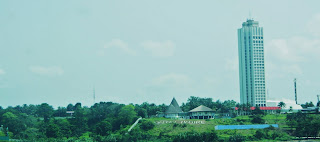
 Hotel Ivoire. Back in the 80’s this hotel represented the luxurious, chic spot that was a playground for wealthy French. Nowadays the Hotel is a ghost. Visits are not allowed since the crisis erupted and this is as closed as I could get, on my way to Yamoussoukro, the political capital.


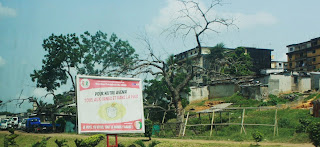
Pour Notre Avenir Tous Aux Urnes et dans la paix (For our future, everyone to the pools in peace- less than perfect translation). Many Ivoirians told me that elections, despite being fair, were in a rather fishy process. There were strong rumors of having more voters than registered people.


Living in Cote D’Ivoire meant getting use to the sights of UN peacekeepers. My friend Lupe, from Argentina, was able to snap this picture without getting caught. The tension of peacekeepers when deployed is evident; The Pro-Gbagbo Campaign held by RTI, with a strong anti-Western sentiment has given results. People In the country do not trust peacekeepers.  I have my mixed feelings, considering that I grew up with a military dad, often times frustrated because of the rampant corruption in the armed forces. After all, armed forces are a reflection of the country. Many of the countries that send soldiers to be peacekeepers are not quite an example of integrity. But I also do not trust anti-Gbagbo media, so the truth, to me, lingers somewhere in the middle. 
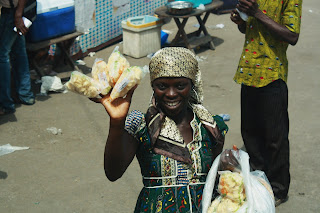
Despite seeing Peacekeepers, I ran into this woman, who gladly posed when she saw me holding a Camera.  Unlike many other countries in West Africa that are used to many tourists, In Cote D’Ivoire I’ve never run into Ivorian demanding money to take a picture (unlike Ghana, where I feel like a piggy bank). Tourism has been dead for almost a decade, when a “white” person is visiting, they truly make you feel home. After this picture, she just walked away, with a never ending smile. 
Willy and Bosco, two of the kids in the AIESEC program in a usual maquis, which basically consists of a bar-restaurant with some plastic chairs and tables. Despite the trip being made in the middle of the crisis ( we had to head back early to Abidjan, as clashes intensified) , these kids know how to have fun any time of the day, even if it involves, cheap, warm wine in a 35 degree heat. For a volunteer budget, Valpierre wine gets a thumbs-up.

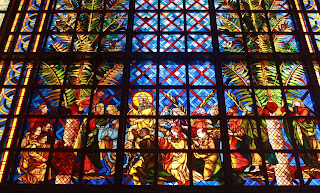
In the years when Ivory Coast was known as the “Miracle of West Africa” The Biggest Basilica in the world was built in Yakro, as people called the political capital. Houphouët-Boigny is portrayed next to God in the stained-glass window. When I made a remark of this portrayal of Houphouët-Boigny being “a tad arrogant” my AIESEC friends were about to punch me. After all, the first president of an independent Ivory Coast was responsible for the “Miracle of West Africa”. The former doctor turned into politician reminds Ivoirians, in a way, what Cote d’Ivoire could have been before the conflict.


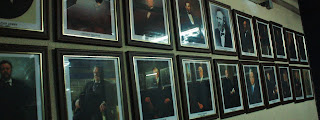
I had the opportunity to visit, “the American Corner” a US-Embassy sponsored media center with information regarding American universities and possibilities to study abroad.  While the US presidents’ portraits where taking two walls of the Corner, less than one of the corners sufficed for the portraits of Ivorian leaders. Seeing the vast difference made me realize how the concept of democracy is still foreign to African politics, as eager as the population might be for it. Also, Ivory Coast, like most African Nations are fairly young, compared to countries as the US and Ecuador. If Ecuador still holds grudges against its colonizer, 500 years later…How can we expect Africa to run at a much faster-pace? It is the complex and, in this part of the world, bloody world of politics.

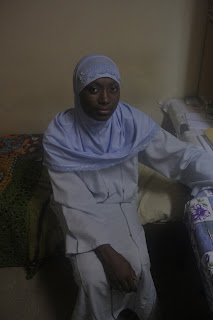
Sally, a management student from the INPHB (Institut National Polytechnique Félix  Houphouët-Boigny),who was my neighbor during my stay at the institute in Yakro. She was quiet, barely laughed and had an interest to teach herself English. She had family in the district of Abobo in Abidjan, known by locals as Baghdad. She was the first person who clarified the conflict that caused the North-South divide: The Dioulas, mainly that tribe has a problem with Gbagbo( yet is not the only one). Not all Muslims have a problem with him. And certainly not all Dioulas are Muslim. Sally was very energetic when making this statement. 
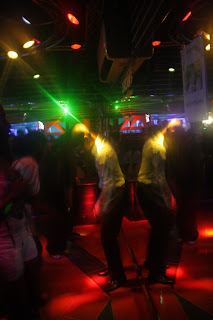
My last night in Yakro, I went through this urge of going out, since I had never been to an Ivorian club before and I knew with the rumors of clashes in Abidjan (reason why we went back the next day) meant more curfew nights and the possibility of clubs not operating for a while. I was taken to Dreams discotheque, a club owned by a Lebanese coupe decalé singer, Nabil La Star. Mirrors are common in bars, and people make a line to dance in front of them. Coupe decale, known by expats as the chicken flu dance, is a quaint dance that involves moving one foot back and forward. Seems silly when explained by words, but as this pictures shows, Ivorians dancing to Magic System and Bebi Phillipe’s tunes make the chicken flu dance seem effortless and beautiful. I hope this is the sight I get to see, rather sooner than later, on my return to Abidjan. 


On my arrival back home to Abidjan, I asked to have this picture taken, the day before I left the house, when I found out my host family was discussing the idea of fleeing Abidjan. A family that gave a new meaning to the word hospitality. As my host sister (not in the photograph) , a fellow AIESECer said to me: You are not a burden. I asked Maman to host you and she said yes because my English would improve and it would be cool to have a foreigner. In Africa, hosting someone is not a problem, is just an extra mouth to feed and there is plenty of food. Ce n’est pas grave.
This picture portrays African Hospitality at is best: I am between my host sister’s sister in law and her son, who fled the district of Riviera because of growing insecurity and the risk it represented for her pregnancy. To my right is my uncle Jean-Pierre (my first blog post, in Spanish was devoted to him,as his story needs a whole entry) a Woro-woro driver who fled Abobo.
I hope to go back home soon. As many Ivorians like my uncle hope. For the crisis, now that there is only one president to end. For the lootings, the insecurity and the water cuts to end. As many Ivorians and residents of Abidjan, I hope to be able to go home, eat, go to work and sleep.


Thursday, April 7, 2011

La toma de Abidjan, séptimo día

El día martes, mientras la comunidad internacional y la prensa confirmaban rumores de una rendición de Gbagbo y la entrada a negociaciones, La población de Abidjan, incrédula pero contenta se relajó un poco, con la esperanza de volver a recuperar los servicios básicos cortados en los últimos días.
En horas de la tarde, la batalla por la toma de la residencia Gbagbo se intensificó. Moradores del sector donde Gbagbo reside, fueron testigos de Fuerzas Republicanas preparando su ataque, en muchos casos, utilizando sus jardines como atajos. La alegría de los rumores sobre la rendición de Gbagbo duró poco. En horas de la noche, los ataques con RPGs y una cantidad de munición sorprendente para un país que se encontraba en proceso de desarme, marcaron el tempo de la noche.
Las fuerzas leales a Gbagbo han demostrado determinación en defender la residencia presidencial y lo que parecía una negociación, fue simplemente una falsa alarma.
El día miércoles, la residencia del Embajador japonés en Abidjan fue víctima de ataques, esta vez efectuados por las Fuerzas de Defensa y Seguridad (FDS) leales a Gbagbo.
Las FDS irrumpieron en la casa con un lanzacohetes para destruir la seguridad de la puerta principal;  para luego saquear la casa. Existen reportes que un miembro del personal de la residencia ha desaparecido y que había sangre en la cocina. El embajador se refugió con parte del staff en uno de los cuartos mientras los ataques continuaban en la residencia.
El incidente con el Embajador Japonés, culminó en su rescate en helicóptero por las Naciones Unidas. Los embajadores en Abidjan se mostraron alerta y Naciones Unidas, al ver que las medidas de protección para la comunidad diplomática en Abidjan no son suficientes, considera evacuar a todo el cuerpo diplomático a un área más segura en Abidjan o, si la situación demuestra escalar a mayores en las próximas horas, fuera del país.
La comunidad de expatriados en Abidjan no ha sido evacuada hasta el momento. Todas las embajadas se encuentran en contacto y listos para una emergencia.
La embajada de España, envía mensajes diarios a la comunidad Iberoamericana en Costa de Marfil, por la que son directamente responsables. “No salgan a las calles, bajo ningún motivo y aléjense de ventanas  y puertas, para evitar balas perdidas” Son las consignas diarias.
Cerca de 2,000 personas extranjeras, en su mayoría franceses,  se encuentran refugiados en Licorne, La base militar del contingente francés. Según fuentes militares, La base Licorne, como la mayoría de sitios en Abidjan, se encuentra sin agua potable, por lo cual enfrentan una situación crítica en los próximos días. La Cruz Roja describe la situación actual como “el golpe más duro para Abidjan en los años de guerra”


Tuesday, April 5, 2011

Cese de Fuego se vislumbra para Costa de Marfil.

En el sexto día del asalto de Abidjan por parte de las Fuerzas Republicanas (Pro-Ouattara)  un cese de fuego luce cercano para la capital Marfileña.
Cuentan residentes de Cocody, en el área cercana a Gbagbo, que desde el día sábado grupos de Jóvenes patriotas, grupo fundado por el ministro de juventud de la administración Gbagbo, Charles Blé Goudé, empezaron a formar una cadena humana. Música a todo volumen tuvieron los vecinos de Gbagbo toda la noche, seguido por canciones en apoyo del presidente y de “una Costa de Marfil para los Marfileños”
Los Jóvenes patriotas se mantuvieron en la residencia lo siguientes dos días, esperando a las Fuerzas Republicanas. El día martes en la noche, la batalla se intensifico con intervención de helicópteros de las fuerzas Licorne (contingente Francés) y ONUCI (Operación de Naciones Unidas en Costa de Marfil)
Testigos de estos enfrentamientos y moradores del sector divisaron un ataque a la casa de Gbagbo de tropas republicanas en horas de la mañana. Según Reportes de AFP, Gbagbo no se encuentra en su residencia y su paradero es desconocido.
Un diplomático Europeo declaró en tempranas horas de la mañana: tenemos  entendido que Laurent Gbagbo se ha rendido y que ha  ordenado a sus tropas que abandonen la batalla.  ONUCI está al tanto del tema y están brindado protección en áreas de alto riesgo para civiles.

Sunday, March 20, 2011

Mi tío de Abobo


Jean-Pierre se sienta pensativo y mira el canal del  Estado (del presidente Gbagbo, uno de los dos presidentes que obtuvo Costa de Marfil en las esperadas elecciones de noviembre 2010) mientras come. Se sienta en calma, con sus lentes rectangulares y su cabeza calva, a mirar la televisión con su cuñada. Es una persona que demuestra serenidad y calma, y que muchas veces se muestra inquieto y absorto en sus pensamientos.  Ese es mi tío anfitrión, Jean-Pierre, uno de las tantas personas que han abandonado el distrito de Abobo en Abidjan.
Naciones Unidas estima que 300,000 personas en la actualidad se han desplazado solamente en la capital económica del país, Abidjan.  Los barrios de Youpougon, Abobo, y Adjamé son prácticamente zonas de guerra.
A pesar de que la violencia es entre los simpatizantes de Gbagbo y Ouattara, en los últimos dos meses el agravamiento de la crisis Post-Electoral ha hecho que la violencia afecte a familias completamente apolíticas y ajenas a los intereses partidistas.
Mi tío Jean-Pierre es uno de ellos.
Hace 3 semanas y media recuerdo llegar a casa, quitarme los zapatos para poder sentarme en la sala alfombrada a ver la tele y vi a una persona nueva; que solo sonreía, como todos los marfileños que he tenido la oportunidad de conocer. En un gesto muy formal y poco común de mi madre anfitriona, me presento a Jean-Pierre: es el hermano de mi marido, quien viene desde Abobo y se va a quedar con nosotros.
Según mi tío, Abobo, si bien se convirtió en una zona guerra, era un lugar  donde se respetaban ciertas normas. Entre los “tiempo fuera”  que ambos bandos tomaban, entre esos pequeños espacios de relativa  paz escabrosa, tuvo la oportunidad de abandonar su distrito.
Jean-Pierre se dirigió a Youpougon, barrio vecino de Abobo. Caminó un buen tramo para llegar. Youpougon fue su refugio por dos días, porque el conflicto se ha desplazado y Youpougon se convirtió en otra “república autónoma” en donde las fuerzas leales a Gbagbo tratan de tomar una parte de Abidjan, donde el presidente reconocido por la constitución del país, no tiene control alguno.
Desde Youpougon Jean Pierre caminó  a república autónoma número tres, Adjamé, distrito eeconocido por ser el centro de ventas informales y comercio, Adjamé es un  distrito donde migrantes de Burkina Faso, Mali, Senegal han sido víctimas de ataques xenofóbicos  en las últimas semanas, provocado por un sentimiento nacionalista que acusa a la comunidad internacional de ser creadora de la crisis, llevada a cabo por la televisión nacional y declaraciones del líder de los jóvenes patriotas, Charles Blé Goudé .
En la estación de woro-woro, viejos taxis compartidos para dirigirse a los diferentes distritos, Jean Pierre tomó un woro-woro al distrito de Marcory. Y así fue como llegó a nuestra casa.
Mi tío, quien antes de la crisis era chofer de mini van (conocidas localmente como Gbaka)  y woro-woro en el distrito de Abobo, está separado de su esposa y su hijo. Ellos se encuentran  en Agboville, ciudad a una hora en carro en dirección norte desde Abidjan . Supe de su familia por mi hermana anfitriona, porque El nunca los menciona.
Cuando finalmente conversé  con él después de la cena, hace dos semanas, me decía que no me preocupe, que no tenga miedo, que estoy fuera de peligro. Que así es Africa, que todo va a pasar. Me comentó que  iba a esperar una semana,  que toda la situación se calme, como se vislumbraba en ese momento e iba a asegurarse que fuera seguro regresar a Abobo la siguiente semana.
A pesar de que repetía que la crisis, como los marfileños se refieren a la guerra civil que vivieron y que se reanudó en los últimos meses, era algo pasajero y que pronto todo iba a estar bien, no dejaba de mirarme con cierta incredulidad hasta que preguntó: de todos los países francófonos, por qué Costa de Marfil?
Le dije que me interesaba mi proyecto y la gente, la historia. Aun así, noté confusión  en su mirada.
Tres semanas y Jean-Pierre empieza a darse cuenta que todo va a empeorar antes de que mejore. Que Abobo está lejos de regresar a la calma y que lo más probable es que más distritos se conviertan en Abobo antes que la ciudad regrese a la calma, vida nocturna vibrante y alegría que la caracterizaba.
Jean Pierre mira las noticias y solo espera. Espera y se ríe mientras la extranjera que vive con ellos no sabe como comer cangrejo, se ríe, pero nunca a carcajadas. Solo mira, se sienta y espera, como todos los Marfileños. On Espere (uno espera, tiene la esperanza) es la frase que todos los habitantes de lo que una vez fue la joya de la colonia Francesa, responden cuando se habla de la situación. Habitantes que esperan  tener un solo presidente, poder ir al trabajo, relajarse con la cerveza más popular, una grosse  bière (también conocida como Drogba) en un maquis y dormir. On Espere Côte d'Ivoire,  On espere.